Dr Teji Dawane is a 17+ years experienced Head of Department and Lead Consultant in Bengaluru, specialising in High-Risk Obstetrics & Maternal Medicine, fluent in English, Hindi, Marathi, Kannada, Malayalam, Telugu, Tamil and Assamese.Book Appointment


A Message from Dr. Teji Dawane

Every pregnancy is unique, and every mother deserves care that is personalized, compassionate, and medically precise. My approach to obstetrics is centred on understanding each woman's individual needs, identifying potential risks early, and providing comprehensive guidance throughout her pregnancy journey.


With over 17 years of experience in Obstetrics and Gynecology, my special focus is on high-risk obstetrics and maternal medicine. I believe that women with medical or pregnancy-related complications deserve careful monitoring, timely intervention, and a clear understanding of their treatment options. My aim is not only to manage complications effectively but also to provide reassurance and confidence to women and their families at every stage.


I am committed to evidence-based medical care while maintaining a strong emphasis on communication and patient comfort. Whether it is pre-pregnancy counselling, antenatal care, management of a high-risk pregnancy, or addressing complex maternal health concerns, my goal is to ensure that every patient receives individualized care focused on the safest possible outcome for both mother and baby.


For me, good healthcare is built on expertise, trust, empathy, and a commitment to putting the patient's wellbeing first.

  • 17+

    Years Of Experience and Expertise

  • 5K+

    High Risk Pregnancies Cases Managed Successfully

  • 10K+

    Advanced Laparoscopic Surgeries Done

  • 25K+

    Lives Touched

Our Healthcare Services

service
High-Risk Pregnancy & Maternal-Fetal Medicine
service
Pregnancy Complication & Multiple Pregnancy Management
service
Normal, Cesarean & Operative Obstetric Care
service
Antenatal & Preconception Care
service
General Gynecology & Gynecologic Disorders Management
service
Gynecologic Laparoscopic & Minimally Invasive Surgery
service
Advanced Gynecologic Surgical Care

Dr. Teji Dawane

Obstetrician, Gynecologist and Laparoscopic Surgeon

Call
Video Call
In person
Dr. Teji Dawane
Qualification:MBBS, MS (OBG)
Experience:17.0 Years
Licence No.:81018 - KMC
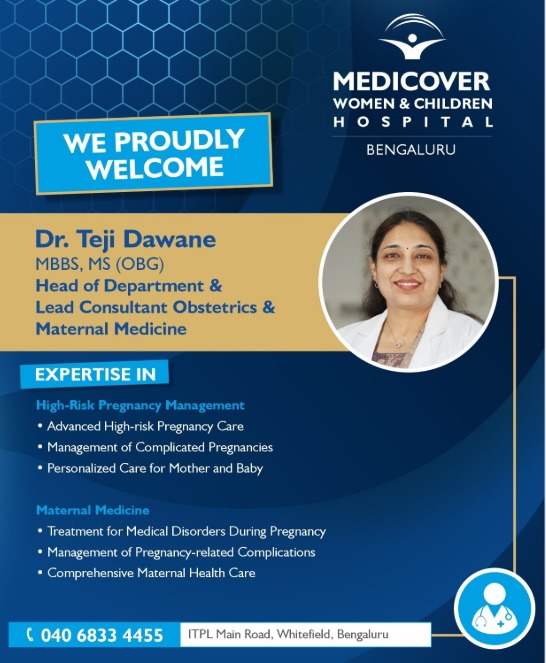
Dr. Teji Dawane is a distinguished Obstetrician and Gynecologist with over 17 years of experience in women's healthcare. She is the Head of Department and Lead Consultant in Obstetrics and Gynecology at Medicover Hospitals, Bengaluru, with a special focus on High-Risk Obstetrics and Maternal Medicine. Dr. Dawane has extensive expertise in managing pregnancies complicated by maternal medical conditions and other obstetric risk factors. Her approach combines clinical expertise, careful monitoring, early identification of complications, and individualized treatment planning to support the health of both mother and baby. She is committed to providing comprehensive care throughout pregnancy, particularly for women requiring specialized maternal-fetal management. Her multilingual communication skills enable her to connect with patients from diverse backgrounds and help them make informed decisions about their care. Dr. Dawane's patient-centred approach emphasizes safety, reassurance, and evidence-based medical management throughout the pregnancy journey.

Testimonials

What our Patients say about us

Truly grateful with our pregnancy journey to delivery under guidance of one of the most capable and amazing doctor : Dr Teji Dawane. She is calm and composed and always treats proactively. …

Satyendra Thakur

Highly recommend this wonderful gynecologist. She is compassionate, approachable, and truly listens to her patients. She is highly ethical and avoids prescribing redundant tests or procedures, focusing instead on accurate diagnosis and treatment through medication.

Durga Rps

Doctor is experienced and friendly and suggested the diet, medication in understandable.

CHANDRA SHEKAR PULIKANTI

Dr. Teji ma'am is like an Angel in my life. During my pregnancy she has taken care very patiently. She explains everything so well and guides properly. Thank you Teji ma'am from bottom of my heart

Ashalata Tripathy

Visited doctor Leenatha reddy for HPV vaccination and she very good and hospital is very clean & hygiene

Viswa S

Updates

Stay informed with our latest updates, posts, announcements, and healthcare news

Update

Read the full article here : https://pregatips.com/getting-p...See More

Update

Everything you need to know about cervical cancer, read the ...See More

Frequently Asked Questions

Need Answers? Find them here...

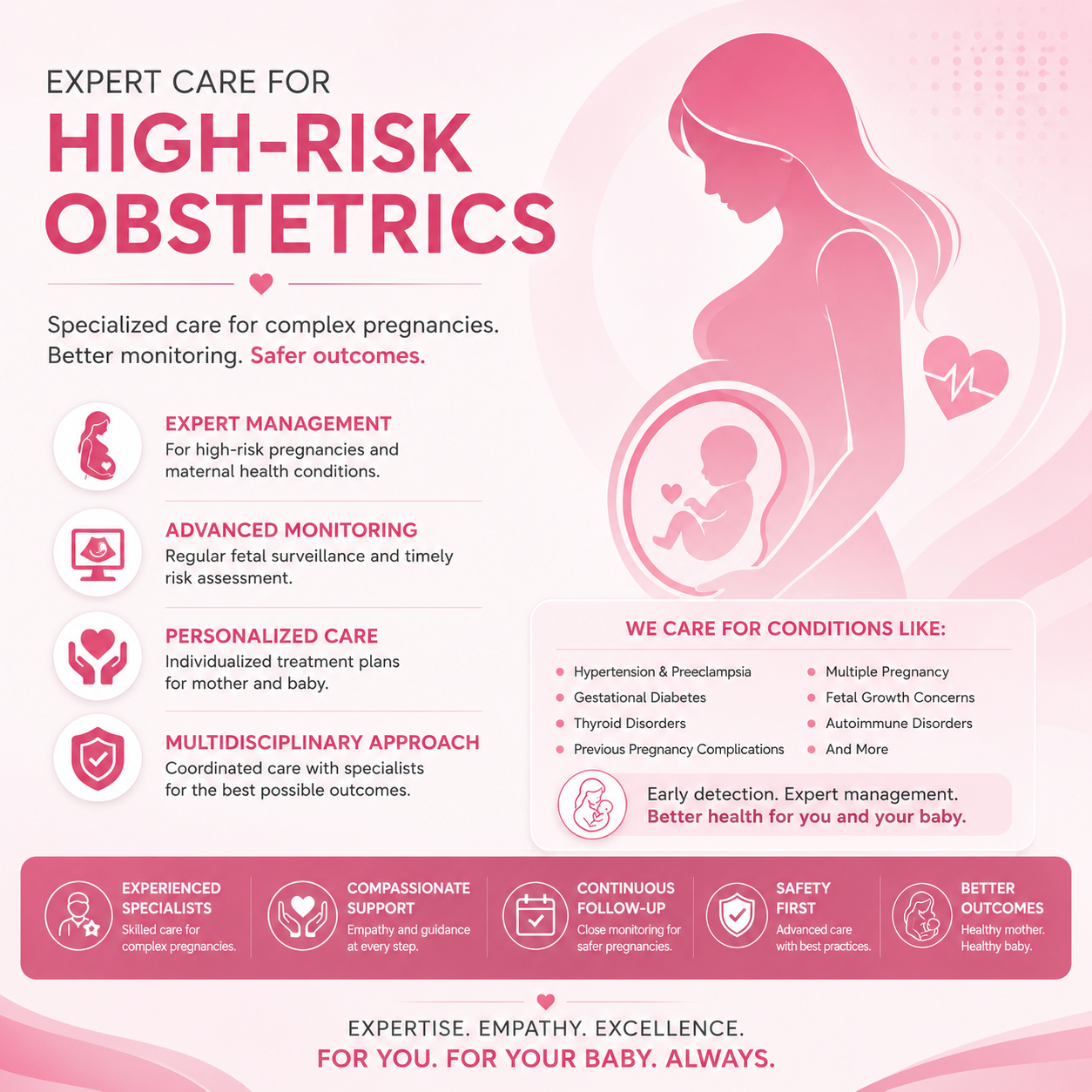
A high-risk pregnancy is one in which the mother, fetus, placenta, or pregnancy itself has an increased likelihood of complications requiring closer monitoring or specialist management. Risk may arise from conditions such as hypertension, diabetes, thyroid disease, autoimmune disorders, previous pregnancy complications, recurrent pregnancy loss, fetal growth abnormalities, placental disorders, or multiple pregnancy. High-risk status can also develop during an otherwise uncomplicated pregnancy. Management is individualized according to the specific risk factors, gestational age, maternal health, and fetal condition, with surveillance and treatment adjusted as the pregnancy progresses.

A consultation may be appropriate before conception or during pregnancy when there are medical conditions, previous adverse pregnancy outcomes, multiple gestation, or concerns involving fetal growth, development, or placental function. Women with diabetes, hypertension, significant thyroid disease, autoimmune conditions, previous preterm birth, recurrent pregnancy loss, or previous pregnancy complications may benefit from specialist assessment. An abnormal ultrasound or other concerning finding may also warrant referral. Early assessment allows risks to be identified, maternal conditions optimized, and an individualized antenatal surveillance and delivery plan established.

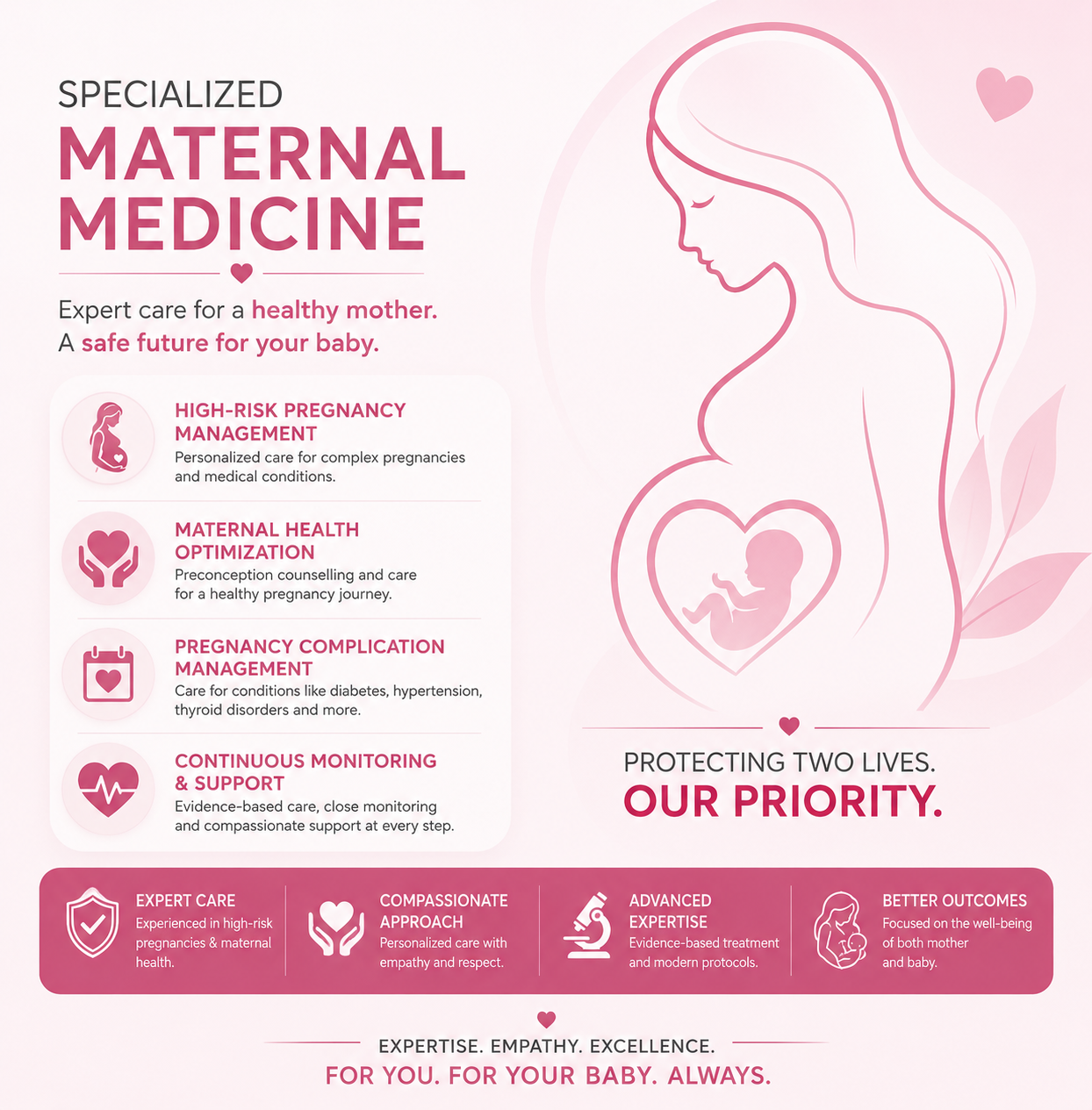
Maternal-Fetal Medicine focuses on pregnancies requiring specialized assessment because of maternal medical conditions, obstetric complications, fetal concerns, or pregnancy-related risk factors. Care may include preconception counselling, detailed antenatal assessment, maternal medical optimization, ultrasound and fetal growth surveillance, Doppler evaluation when indicated, and management of complex pregnancy conditions. The frequency and type of monitoring depend on the clinical situation rather than following one standard schedule for every patient. Maternal-Fetal Medicine also contributes to delivery planning when pregnancy risks require specific timing, mode of delivery, or coordination with other medical and neonatal specialists.

Preconception counselling provides an opportunity to identify and address factors that could influence pregnancy before conception occurs. Assessment may include previous pregnancy history, chronic medical conditions, medications, nutritional status, vaccination requirements, and reproductive goals. Conditions such as diabetes, hypertension, thyroid disorders, and anemia can often be optimized before pregnancy, potentially reducing pregnancy-related risks. Appropriate folic acid supplementation and medication review may also be discussed. Women with previous pregnancy complications or significant medical conditions may benefit particularly from early planning, allowing their pregnancy care to be individualized from the beginning.

Twin and higher-order pregnancies generally require closer antenatal surveillance because risks such as preterm birth, hypertensive disorders, fetal growth abnormalities, and complications related to placental sharing can be increased. Monitoring is individualized according to the number of fetuses and whether the pregnancy is monochorionic or dichorionic. Ultrasound assessment may be used to evaluate fetal growth, amniotic fluid, placental characteristics, and growth differences between fetuses. In relevant monochorionic pregnancies, additional surveillance may be required for complications involving shared placental circulation. Delivery planning is based on maternal and fetal findings and the progression of pregnancy.

Pregnancy can be complicated by maternal medical disorders, pregnancy-specific conditions, fetal abnormalities, or placental problems. Common examples include gestational diabetes, preeclampsia and other hypertensive disorders, thyroid disease, anemia, autoimmune conditions, fetal growth restriction, placental abnormalities, and recurrent pregnancy loss. Previous preterm birth or other adverse obstetric outcomes can also influence the level of surveillance required. Some conditions may be present before conception, while others develop during pregnancy. Appropriate assessment helps determine the required monitoring, investigations, treatment, and timing of follow-up according to maternal and fetal needs.

Antenatal care involves regular assessment of maternal health, fetal development, and pregnancy progression. Depending on gestational age and individual risk, care may include clinical examination, blood pressure monitoring, laboratory investigations, ultrasound examinations, fetal growth assessment, screening for pregnancy-related conditions, and evaluation of fetal well-being. Antenatal counselling also addresses nutrition, supplementation, medications, vaccination, lifestyle, warning symptoms, and preparation for delivery. Women with high-risk pregnancies may require additional visits, investigations, or fetal surveillance. The care plan is adjusted according to clinical findings and changes in maternal or fetal condition throughout pregnancy.

The mode of delivery is determined according to maternal health, fetal well-being, gestational age, fetal presentation, placental location, previous obstetric history, labour progression, and other pregnancy-specific factors. Vaginal delivery may be appropriate when there are no contraindications and labour progresses safely. Cesarean delivery may be recommended when vaginal birth presents greater risk or when specific maternal or fetal indications arise. Previous cesarean delivery does not automatically mean that every subsequent birth requires cesarean delivery; the suitability of vaginal birth after cesarean is assessed individually. Delivery planning should therefore be based on the complete clinical picture.

Cesarean delivery may be planned or performed when vaginal birth is contraindicated, unsuccessful, or considered less safe for the mother or fetus. Potential indications include certain fetal presentations, placenta previa, non-reassuring fetal status, failure of labour to progress, selected maternal medical conditions, and other obstetric complications. The indication varies between patients, and the decision depends on gestational age, maternal condition, fetal status, previous surgical history, and the circumstances at the time of delivery. When a cesarean is recommended, appropriate preoperative assessment, anesthesia planning, surgical care, and postoperative monitoring form part of comprehensive obstetric management.

Gynecologic laparoscopy can be used to diagnose or treat selected conditions involving the uterus, ovaries, fallopian tubes, and pelvis. Depending on the diagnosis, procedures may include ovarian cystectomy, treatment of endometriosis, adhesiolysis, salpingectomy, selected myomectomy, hysterectomy, and management of appropriately selected ectopic pregnancies. Laparoscopy involves specialized instruments introduced through small abdominal incisions. Whether it is appropriate depends on the underlying condition, its extent, previous surgeries, overall health, and surgical expertise available. A detailed clinical and imaging assessment helps determine the safest and most effective surgical approach for each patient.

Minimally invasive gynecologic surgery uses smaller surgical access points and specialized instruments instead of a conventional large abdominal incision for selected procedures. Laparoscopic and hysteroscopic techniques may be used for appropriately selected uterine, ovarian, tubal, or pelvic conditions. Potential advantages can include smaller incisions, reduced postoperative discomfort, shorter hospitalization, and faster recovery, although outcomes depend on the specific procedure and individual patient factors. Minimally invasive surgery is not suitable for every condition. The recommended approach is determined after evaluating the diagnosis, disease extent, previous surgery, reproductive goals, and overall medical status.

In appropriately selected patients, gynecologic surgery can be planned with the goal of preserving reproductive organs and fertility potential. The approach depends on the underlying condition, extent of disease, ovarian and uterine involvement, age, previous surgery, and future pregnancy plans. For example, selected fibroids may be treated with uterus-preserving myomectomy, while ovarian cyst surgery may aim to preserve healthy ovarian tissue where medically feasible. Endometriosis and pelvic adhesions may also be treated using fertility-conscious approaches. A detailed preoperative discussion is important to explain expected benefits, limitations, fertility implications, and alternative treatment options.

Location & Location Map

Location
addressAddress

Medicover Hospitals – Woman and Children, Bengaluru,351 ITPL Main Road, Whitefield Road, Krishnarajapura Hobli, Hoodi, Bengaluru 560048, Karnataka

7022719983
  • Social Media Connect:

Working Hours

MONDAYClosed
TUESDAYClosed
WEDNESDAYClosed
THURSDAYClosed
FRIDAYClosed
SATURDAYClosed
SUNDAYClosed

Contact Us

Contact Us

  • Email: zivacareclinic@gmail.com

Social Media connect:

Website Powered by icareheal

© Dr. Teji Dawane 2025